
Oven-Dried Juliet Tomatoes (Freezer Friendly)

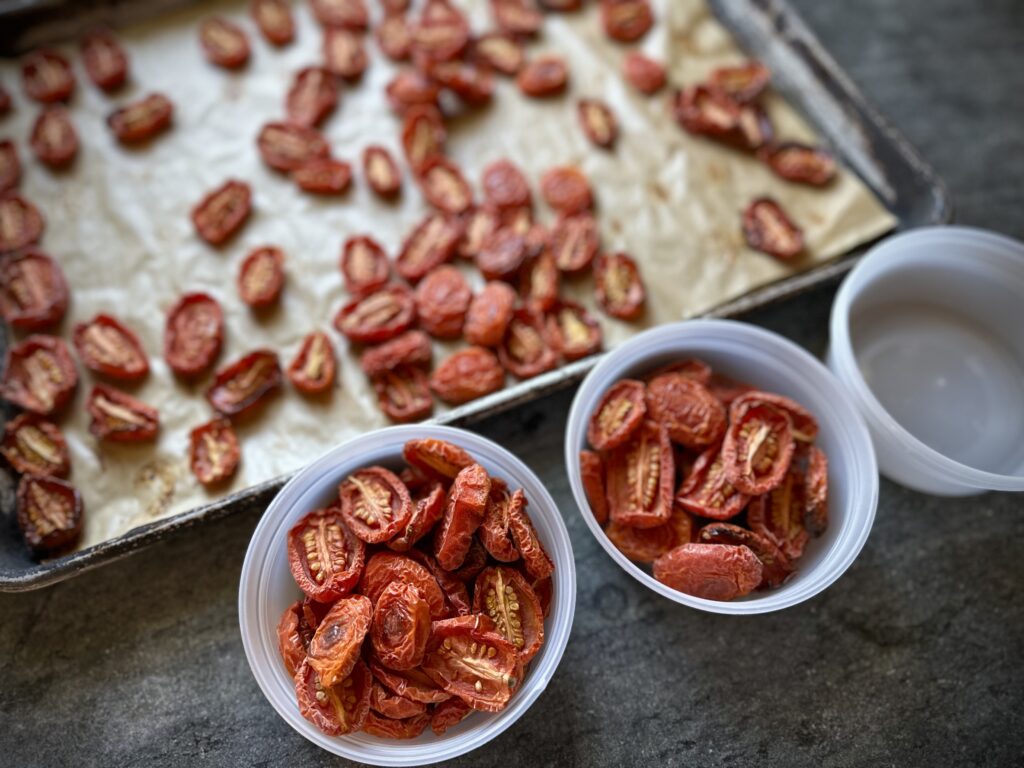
Oven-roasted Juliet tomatoes on a parchment-lined baking sheet, with two small containers filled for freezer storage.

Certain things are grown in our garden with a very specific purpose in mind, and Juliet tomatoes are one of them. Every summer, I look forward to filling baking sheets with these little tomatoes, roasting them until they become wonderfully concentrated flavor bombs that are tucked into the freezer for winter cooking.

While oven-roasted Juliets are the result, this one item is then used in many recipes. This is foundational to how our pantry works: like a restaurant menu, one ingredient is used in several of recipes. This adds culinary variety without expanding your grocery or grow list. 

Oven-roasted Juliet tomatoes require just one ingredient. No oil, no salt, no seasonings. Simply tomatoes and a little time in the oven.

We use them on homemade pizza, in pasta dishes, with risotto, in various salads, and in one of our family’s favorite winter fast-food meals: pesto pasta. It’s especially likely to make an appearance when our daughter comes home for a visit.

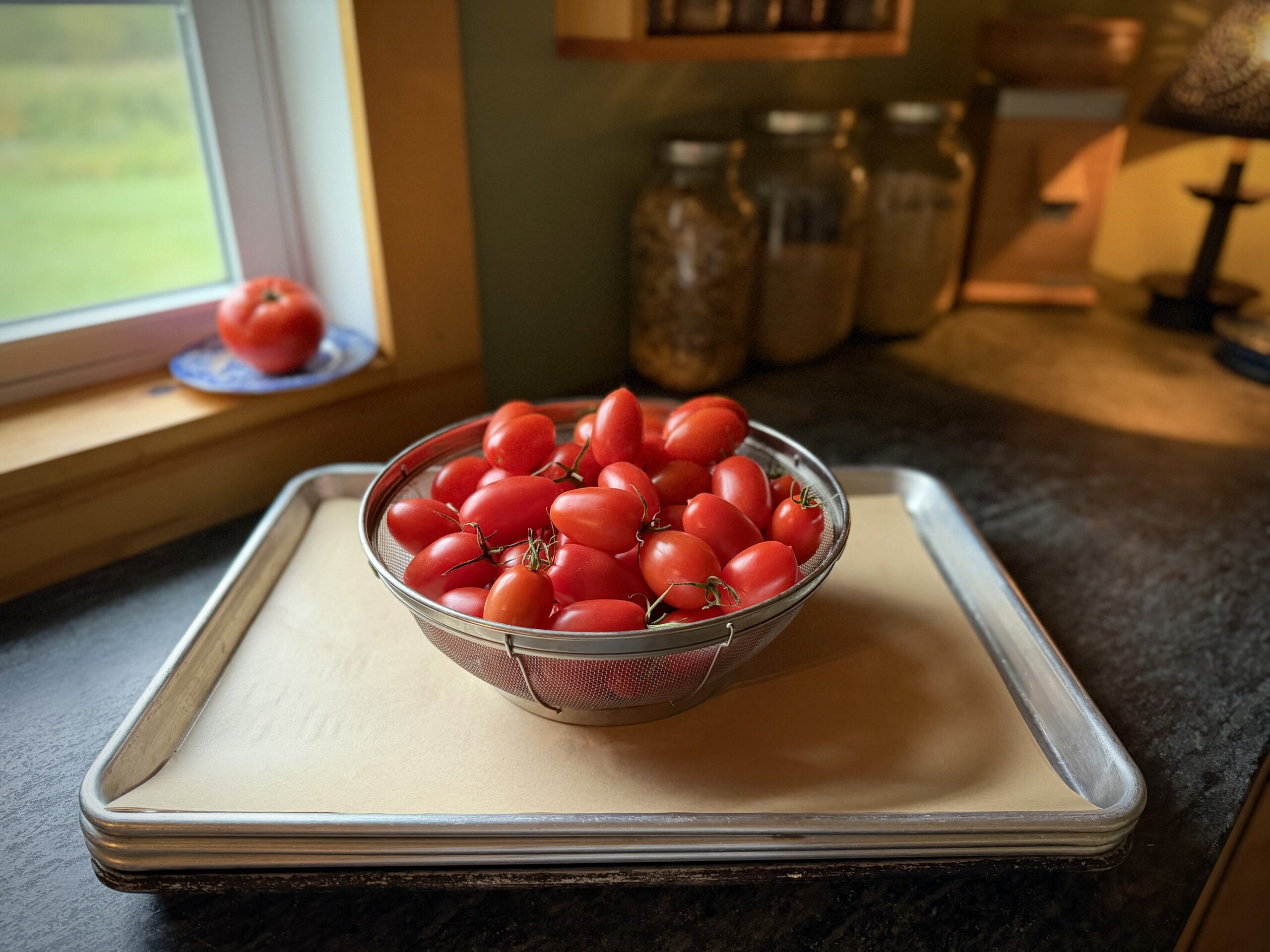
Freshly harvested Juliet tomatoes in a metal colander, resting on a parchment-lined baking sheet in a farmhouse kitchen.

Giving Credit to Whole-Fed Homestead

This is not as much a recipe as it is a technique, that I first learned from my friend Crystal of Whole-Fed Homestead, who shared it years ago (on Facebook I believe) and later included it in her book, Freeze Fresh. I highly recommend adding her book to your food preservation library.

My only real adjustment is that I roast the tomatoes a little longer. We like to make them somewhat drier, with a deeper roasted flavor and slightly caramelized edges.

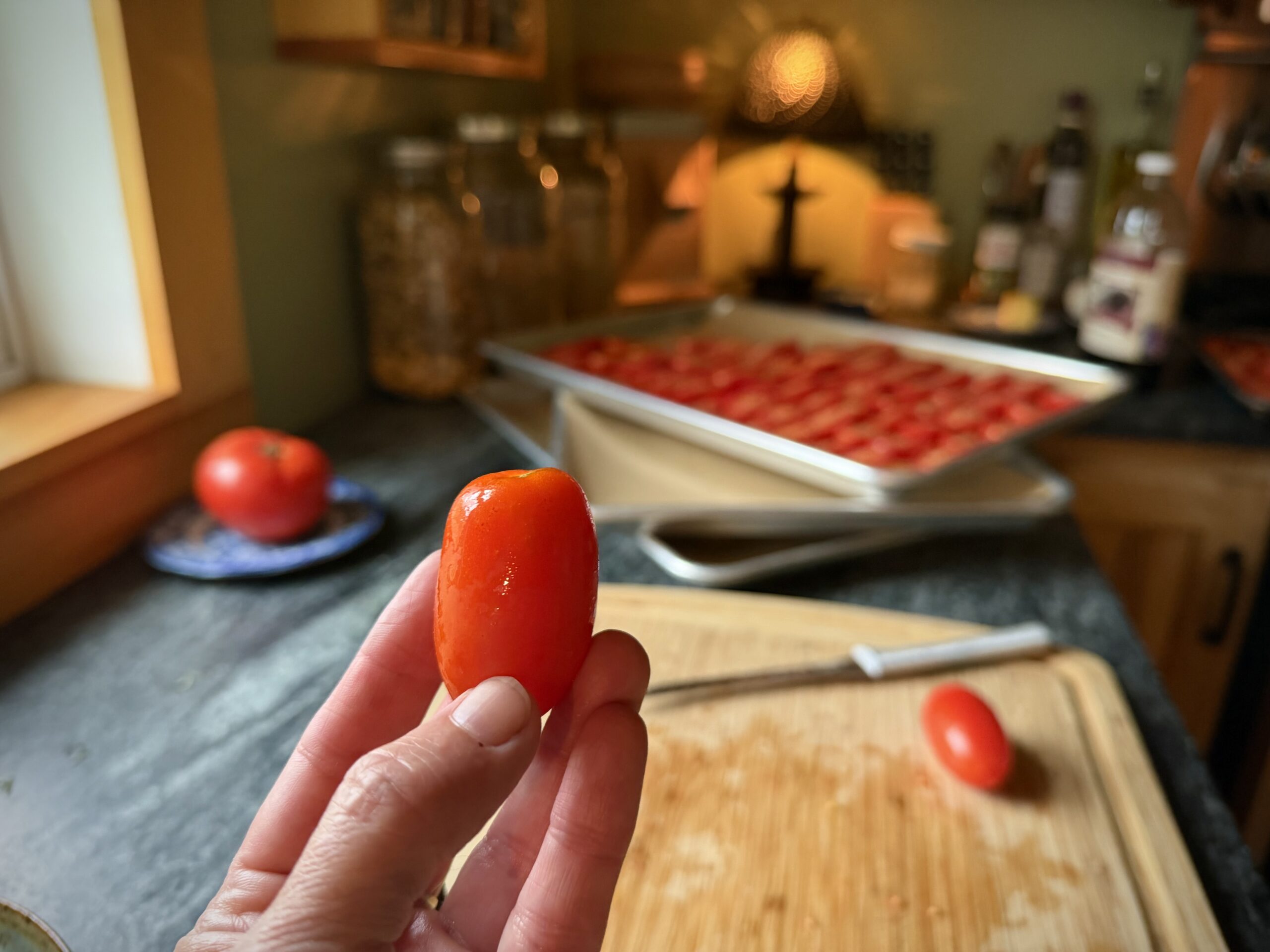
A freshly harvested Juliet tomato held between fingers to show its small, elongated shape, with prepared tomatoes on baking sheets in the background.

Why Juliet Tomatoes?

Juliet is a hybrid tomato variety that falls somewhere between a cherry tomato and a small plum tomato. They’re smaller like a cherry, but meatier and more elongated like a plum.

They’re prolific, reliable producers in our garden, and their size makes them particularly well suited to this technique. Simply halve them lengthwise, arrange them on a baking sheet, and into the oven they go.

Can you use another variety? Certainly, though this variety is preferred. Small plum or grape tomatoes would be my first alternatives. Larger tomatoes contain varying amounts of moisture and will require different roasting times, so use the appearance and texture of the finished tomatoes as your guide.

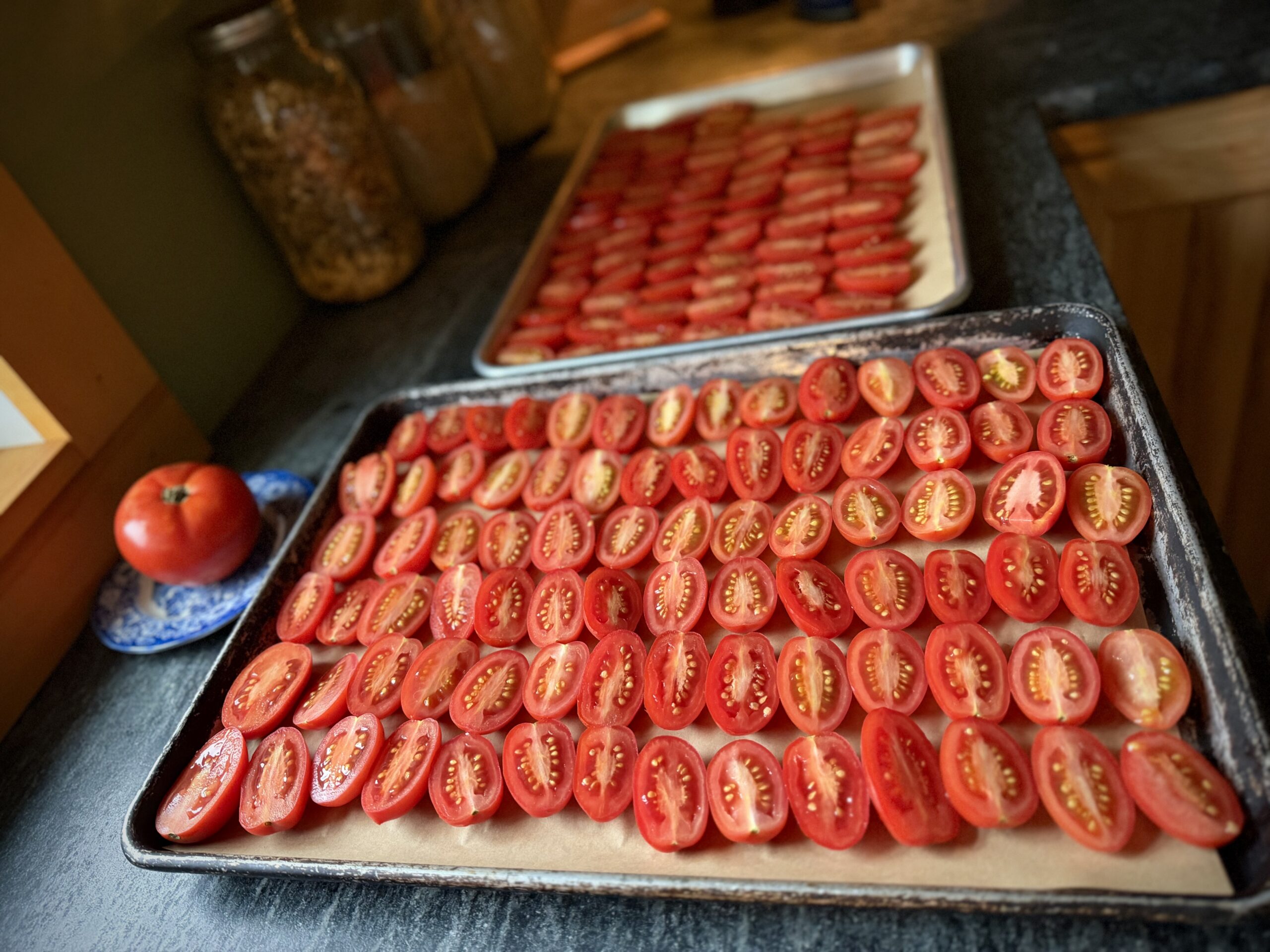
Fresh Juliet tomatoes sliced lengthwise and arranged cut-side up on two parchment-lined baking sheets, ready for oven roasting.

Why I Grow Tomatoes Specifically for the Freezer

I grow Juliet tomatoes with this particular purpose in mind. While we enjoy plenty of fresh tomatoes during the growing season, we don’t purchase grocery-store tomatoes during the winter. Instead, I rely on the variety of tomatoes we’ve preserved from our own garden.

These little oven-roasted Juliets are among my favorites to have on hand. Their concentrated flavor is a welcome addition to so many winter meals, and I would much rather add a handful of these to a pizza or pasta dish than purchase a flavorless tomato in January.

They’re also a good example of how I approach stocking our pantry and freezer. I want the food we preserve to be useful, not simply something we put away because we had an abundance of it. These tomatoes earn their place many times over, appearing in several of our regular meals throughout the colder months.

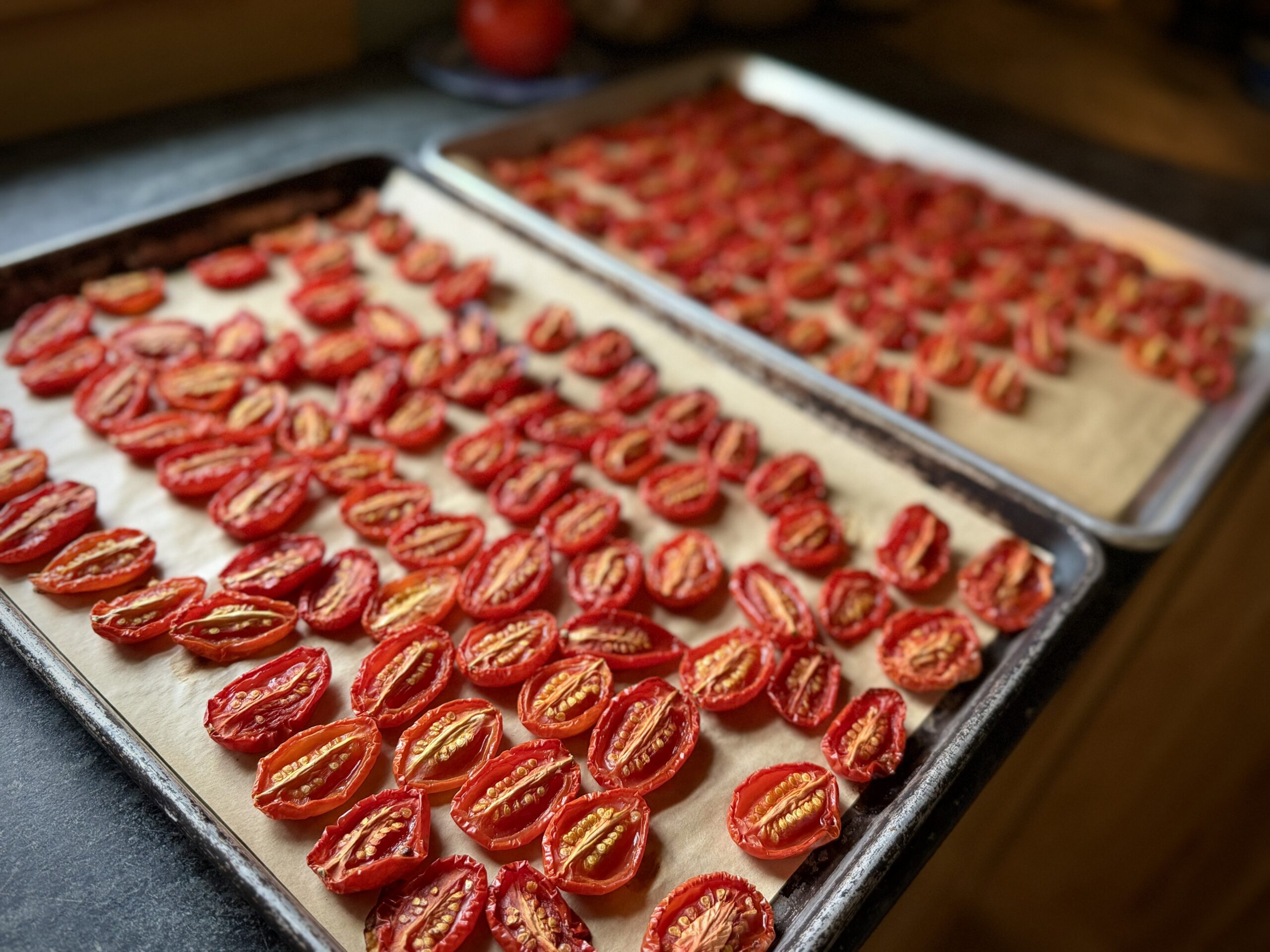
Oven-roasted Juliet tomato halves on parchment-lined baking sheets, with wrinkled skins and concentrated red color, ready for freezer storage.

How to Freeze Oven-Roasted Tomatoes

Allow the roasted tomatoes to cool briefly on their baking sheet. Transfer the baking sheet to the freezer in a single layer and flash-freeze for a few hours, until firm. Once frozen, pack them into freezer bags or freezer-safe containers, removing as much excess air as practical.

Label each container with the contents and date. I like portioning mine into Reditainer Extreme Freeze Containers.

Important: These are roasted tomatoes intended for freezer storage, not shelf-stable dried tomatoes. Keep them frozen until you’re ready to use them.

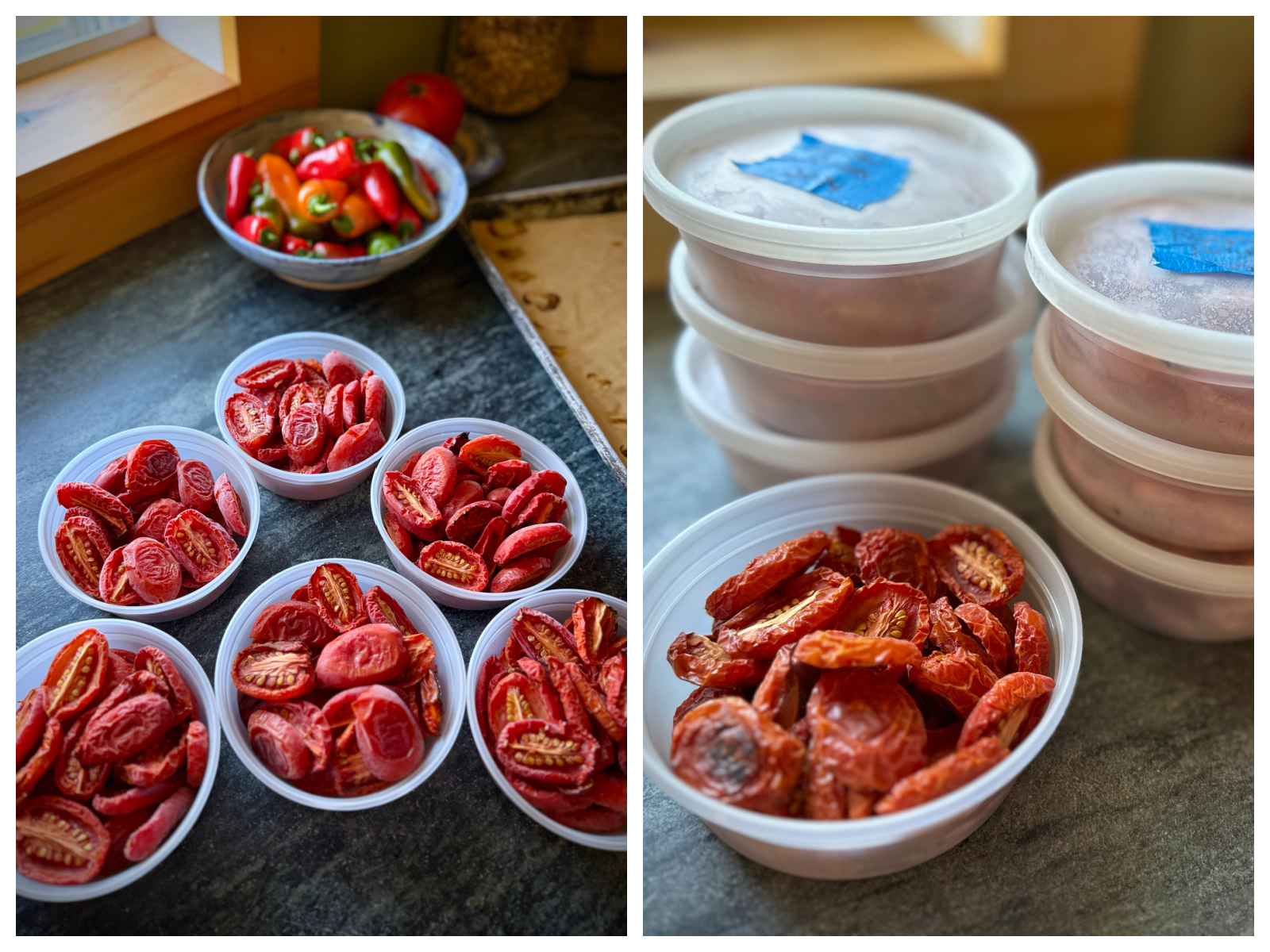
Oven-roasted Juliet tomatoes portioned into small freezer containers, with filled and labeled containers stacked for winter storage.
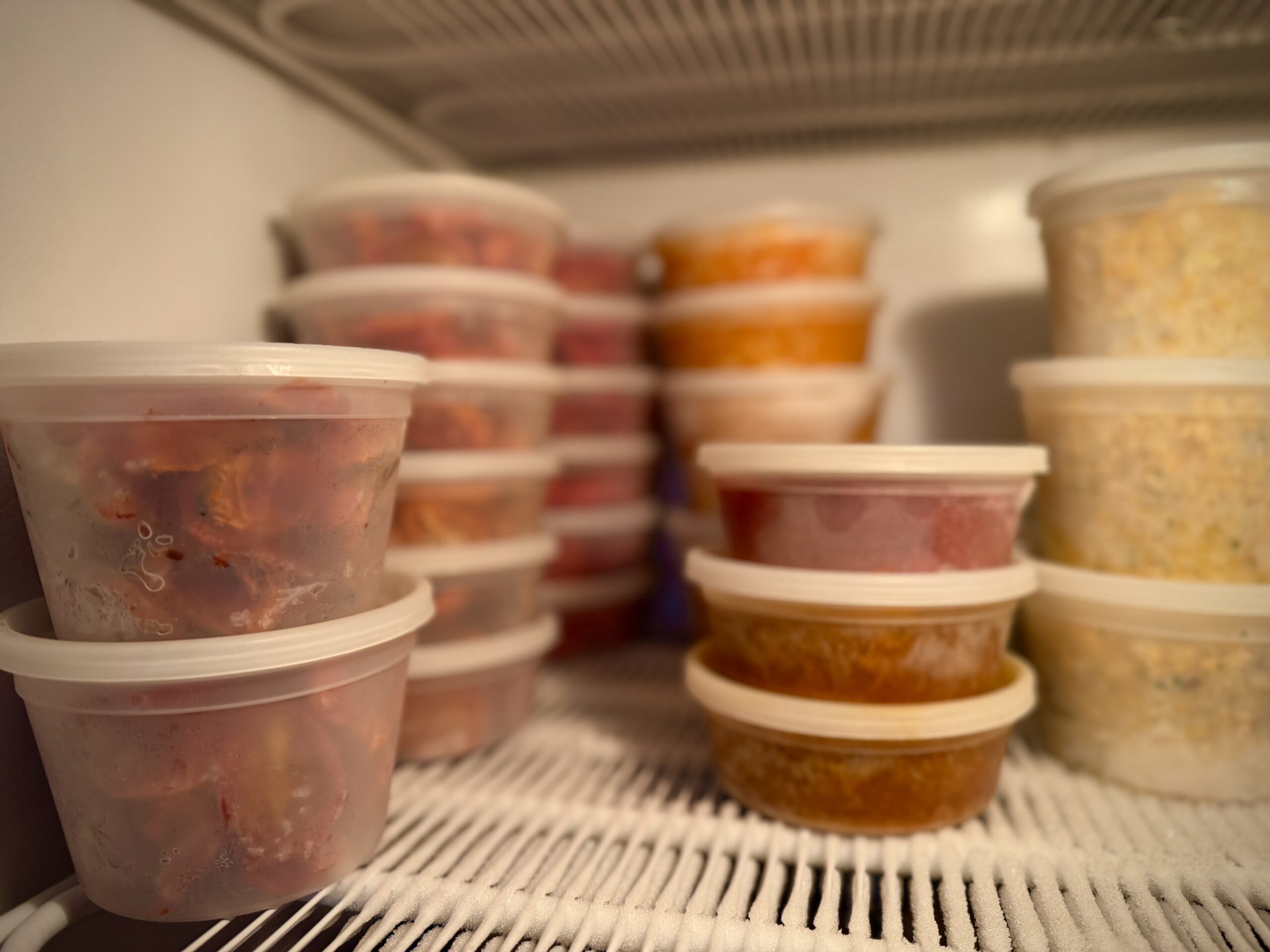
Freezer containers in the freezer filled with the harvest.

Ways to Use Oven-Roasted Juliet Tomatoes

This is where these little tomatoes really earn their freezer space.

  • Pesto Pasta: One of our staple winter meals, made with ingredients we’ve put away during the growing season. 

  • Homemade pizza: Scatter the tomatoes over pizza before baking for little bursts of concentrated tomato flavor.

  • Risotto: Stir them into a sausage and mushroom risotto.

  • Pasta salads: A lovely addition when fresh garden tomatoes are months away.

  • Winter bruschetta: Pile them onto homemade French bread with basil pesto and mozzarella, and toast to perfection. 

  • Soups and sauces: Add a handful when you want a deeper roasted tomato flavor.

  • Savory breads and focaccia: Tuck a few into the dough or arrange them over the top before baking.

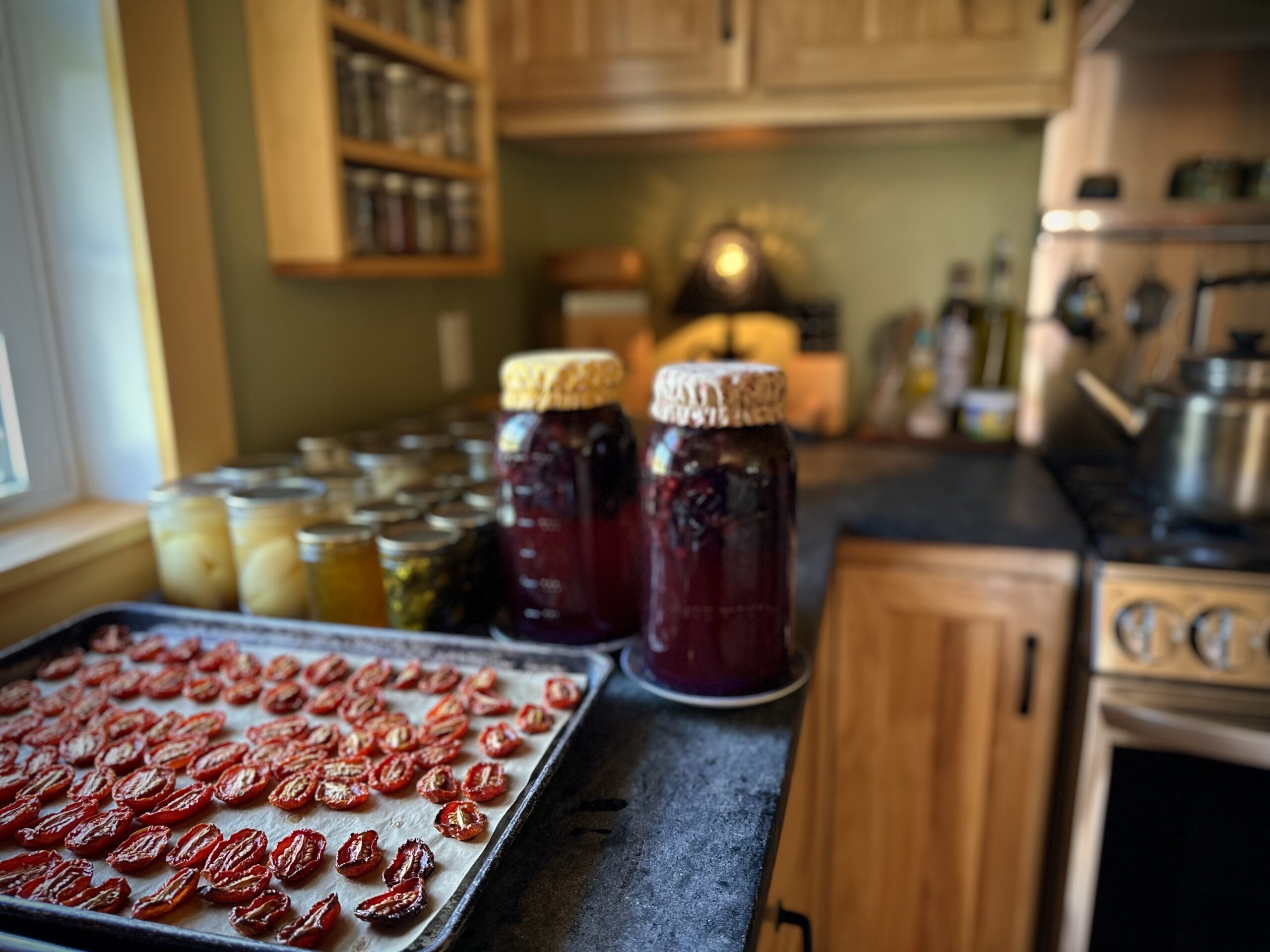
Oven-roasted Juliet tomato halves on a parchment-lined baking sheet in a farmhouse kitchen, surrounded by jars of preserved garden produce.

A Bite of Summer in the Winter Kitchen

There’s something particularly satisfying about opening the freezer in January and finding the ingredients for a meal that began in the summer garden.

A container of these tomatoes, a jar of homemade pesto, and a pot of pasta can become supper in very little time. It’s one of the reasons I grow Juliet tomatoes year after year.

One ingredient, a little time in the oven, and another pantry staple tucked away for the months ahead.

Oven-Dried Juliet Tomatoes (For the Freezer)

A wonderful way to preserve the summer harvest. Slowly oven-dried until their flavor is concentrated and texture is slight chewy, they're easy to freeze in small portions for pasta, soups, sauces, focaccia and more.

Ingredients

  • Fresh ripe Juliet tomatoes, as many as desired

Instructions

  • Preheat oven to 400°F. Wash the tomatoes and slice each in half lengthwise, exposing the seed cavity. Do not remove the seeds or pulp.
  • Place the tomato halves in a single layer, cut side up, on parchment-lined baking sheets.
  • Bake at 400°F for 30 minutes.
  • Lower the oven temperature to 350°F and continue roasting for another 30–45 minutes, until the tomatoes are beginning to brown on the bottoms and look dry.
  • Remove from the oven and allow the tomatoes to cool on the baking sheets.
  • Transfer the cooled tomatoes to the freezer in a single layer and freeze for a few hours, until solid.
  • Transfer the frozen tomatoes to freezer bags or freezer-safe containers. Label and return to the freezer.

Notes

Roasting time: The exact time will vary depending on the size and moisture content of the tomatoes. Look for concentrated, slightly shriveled tomatoes that are beginning to dry rather than relying solely on the clock.
Freezer storage: Flash freezing helps prevent the tomatoes from sticking together, making it easy to remove just what you need for a recipe.
Using your tomatoes: Add them to pasta dishes, focaccia, sauces, soups, or other recipes where you want a concentrated tomato flavor.
Welcome

Settle in and make yourself at home. Here you will find from scratch recipes from my kitchen to yours. For everyday musings, please visit me on Instagram. Would you like a little more info? You can do that here.

Hearth & Home

Weekly lessons on all things related to homemaking, growing and preserving food, family herbalism, preparedness and homesteading.

ShareThis Blog

Facebook
Pinterest

Leave a Reply

Your email address will not be published. Required fields are marked *

Recipe Rating