Classic Homemade Basil Pesto (Freezer-Friendly)

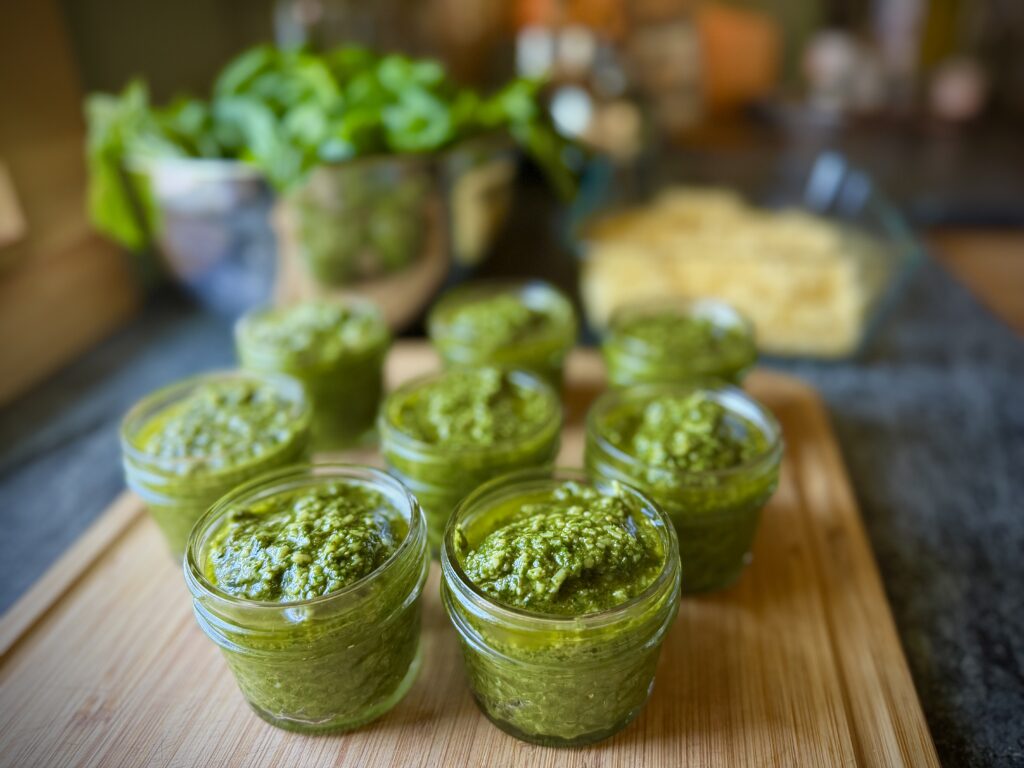
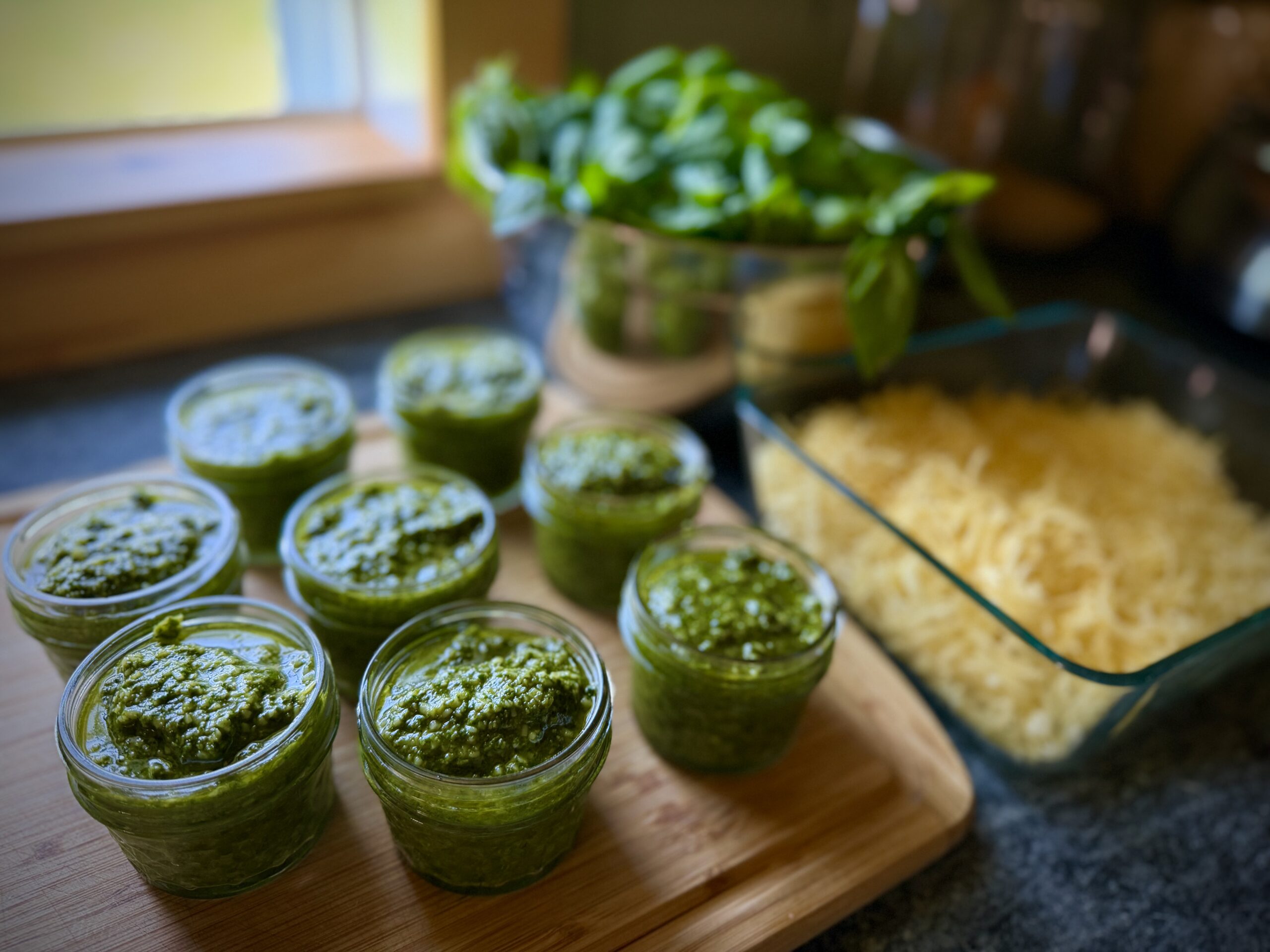
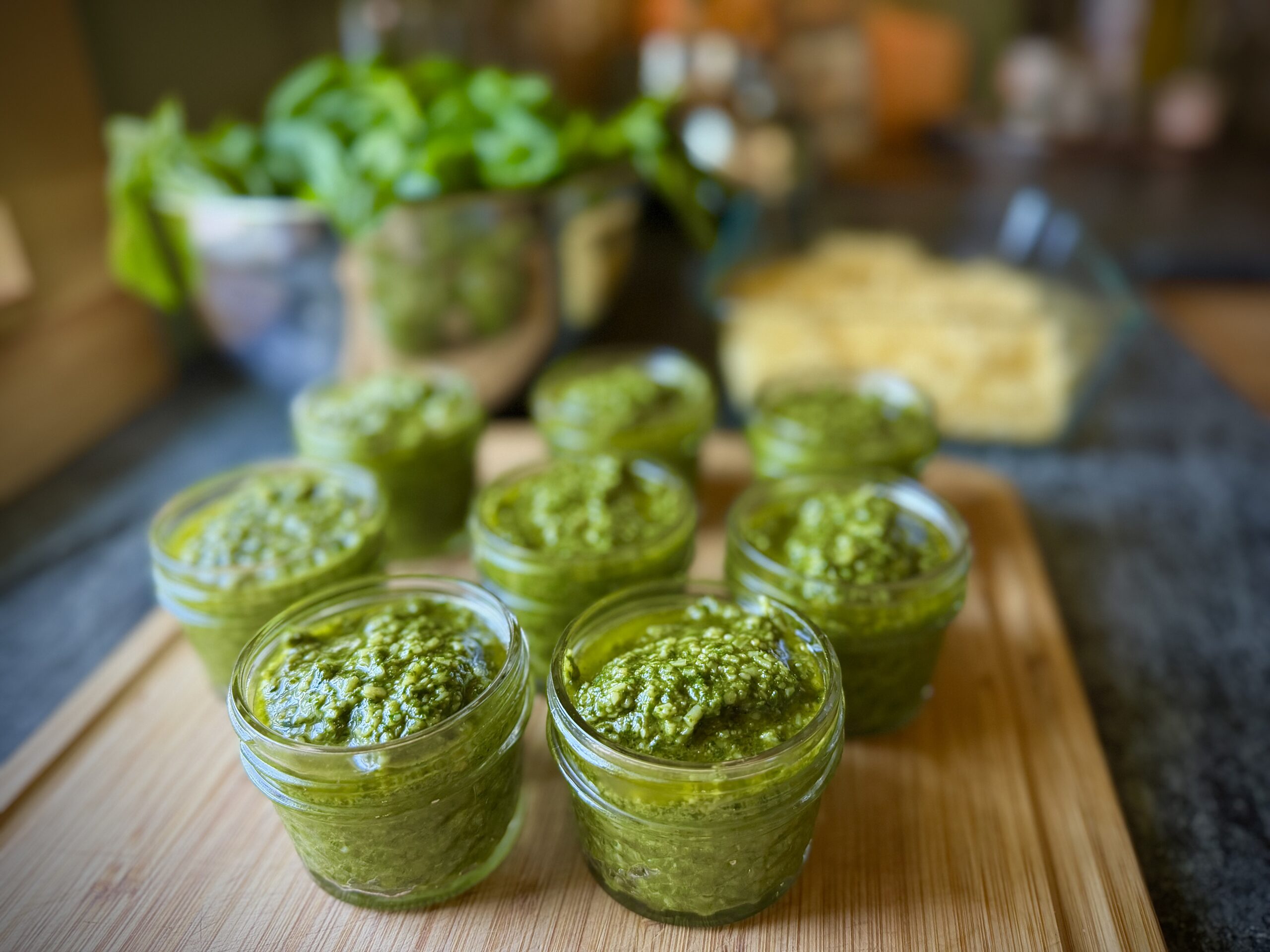
Small glass jars filled with homemade basil pesto on a wooden cutting board, with fresh basil and grated Parmesan in the background.

Every summer we grow enough basil to make a double, or even a quadruple, batch of this pesto. Before each growing season comes to a close, the freezer is filled with bright green little jars of pesto ready for simple weeknights, everyday lunches, last-minute appetizers, or even specialty dishes for the holidays.

This recipe is truly a pantry staple for us, and if you stock your pantry similar to the way I stock mine, you know one ingredient must serve multiple recipes. A restaurant kitchen never stocks an ingredient for only one dish; a home kitchen is wise to function the same. 

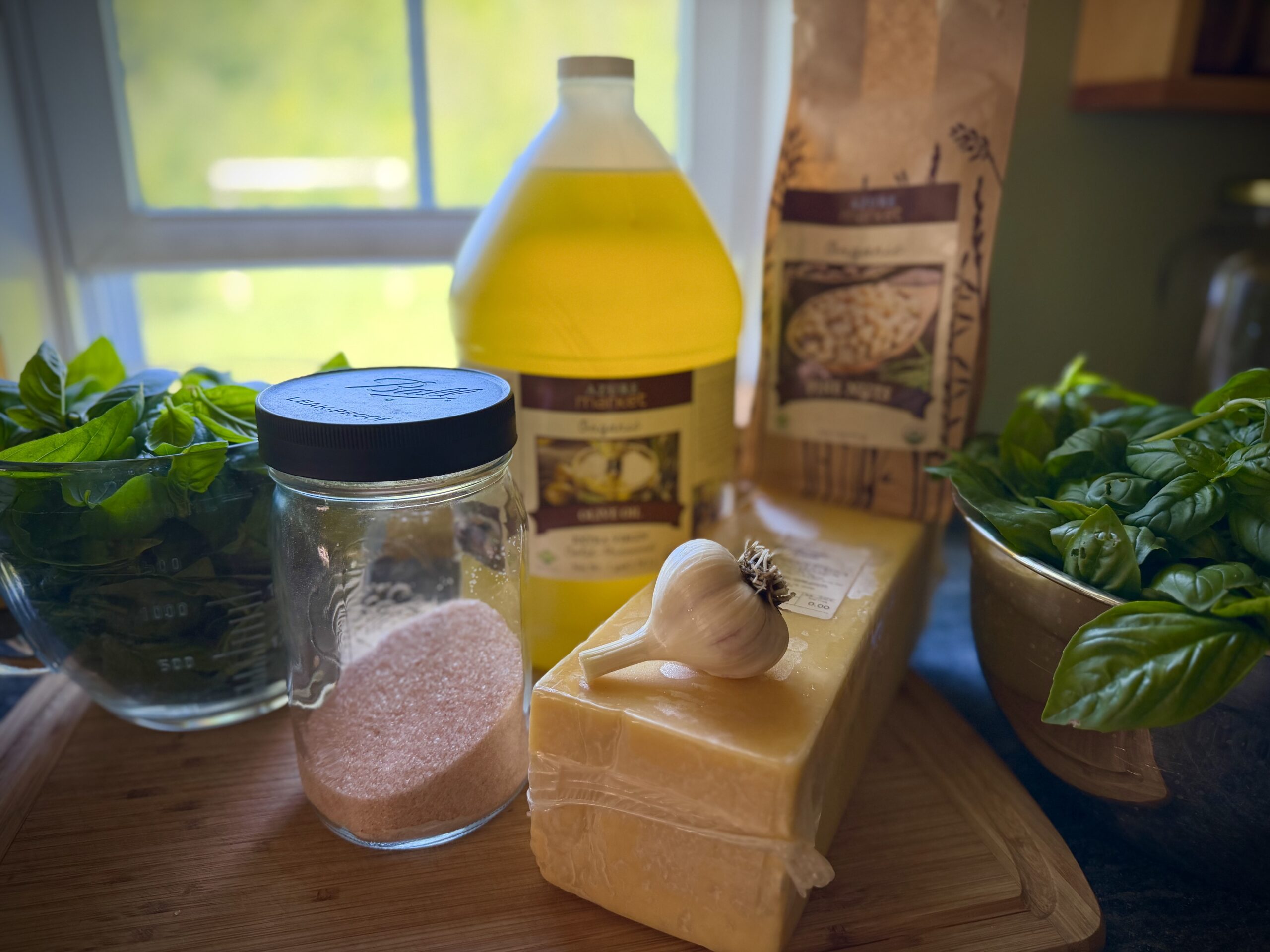
Fresh basil, Parmesan cheese, garlic, olive oil, and sea salt arranged on a wooden cutting board for making homemade basil pesto.

Homemade pesto has become one of those pantry staples I never regret making. It comes together in minutes, freezes beautifully, and captures the fresh flavor of summer long after the garden has gone to sleep. If your basil patch is overflowing, this is one of the most delicious ways I know to preserve the harvest.

Why You'll Love This Recipe

  • A pantry staple that instantly adds flavor.
  • Freezes beautifully.
  • Easy to double or quadruple (or more!).
  • Perfect for pasta, pizza, soups, risotto, sandwiches, and appetizers.
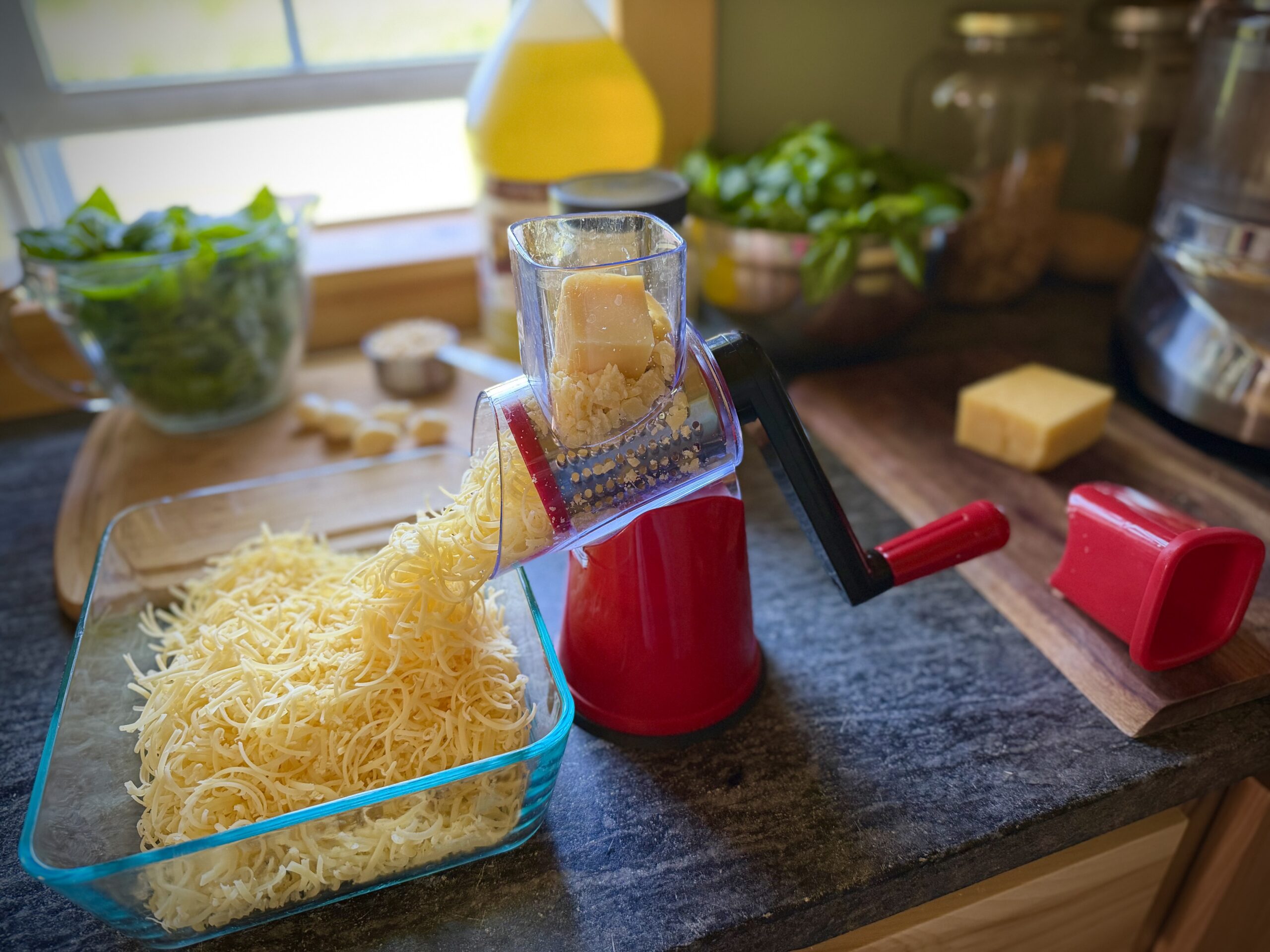
Fresh Parmesan cheese being grated for homemade basil pesto.
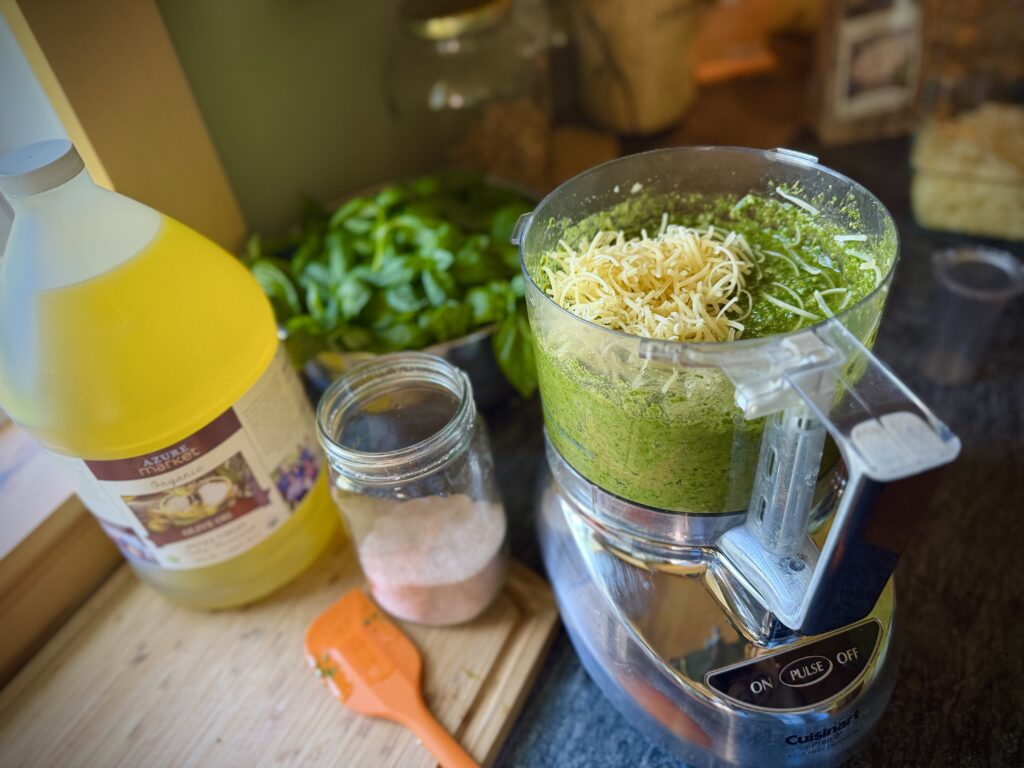
Freshly grated Parmesan cheese added to homemade basil pesto in a food processor before mixing.
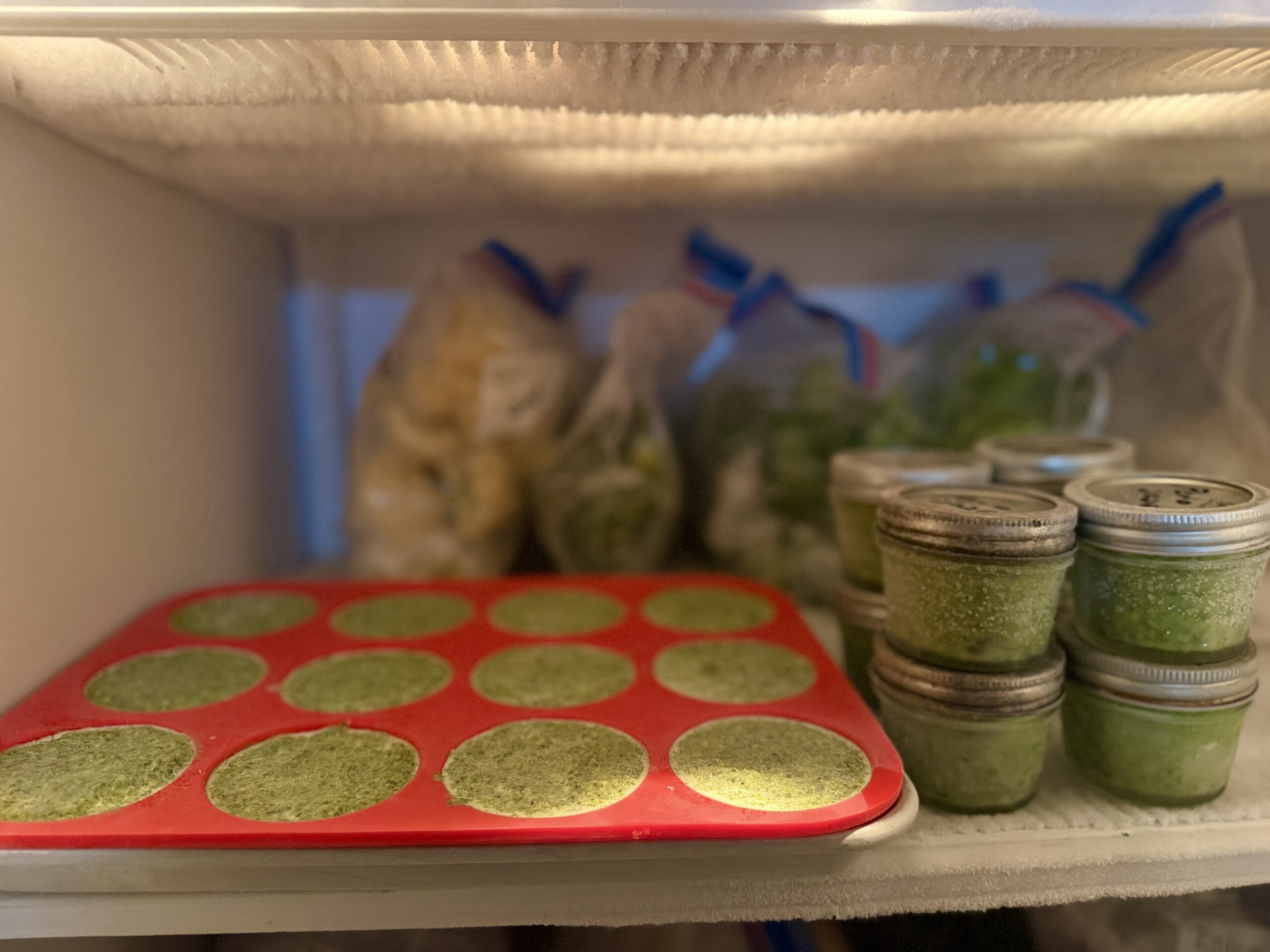
Homemade basil pesto frozen in small glass jars and silicone freezer trays for long-term storage.
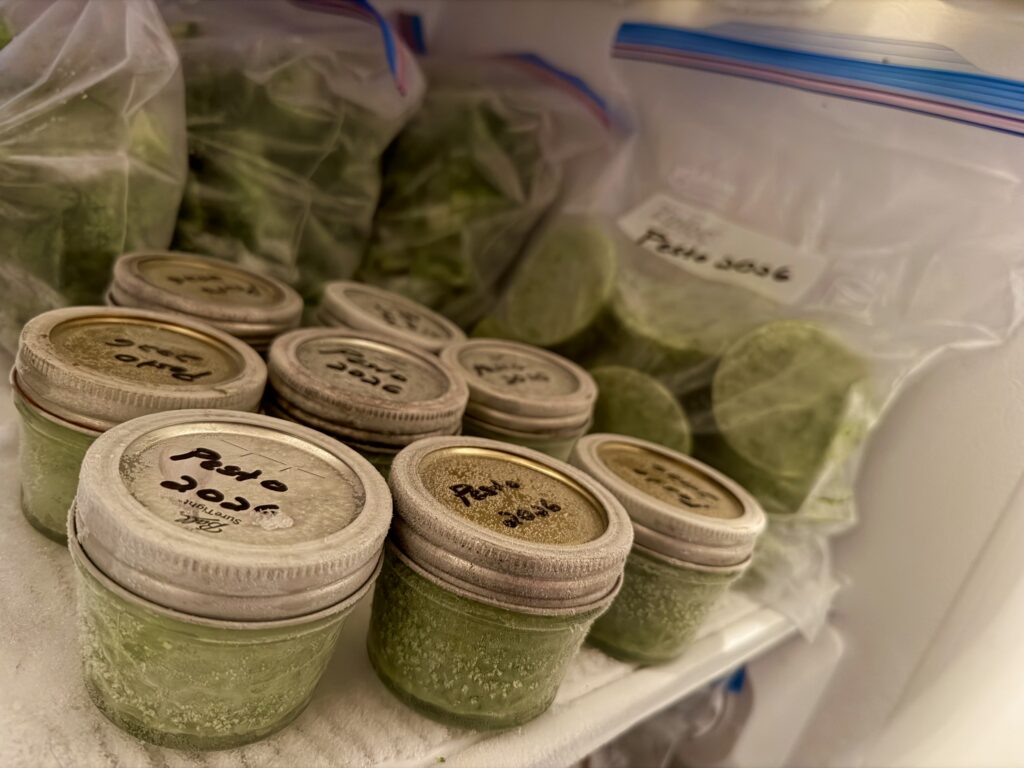
Frozen homemade basil pesto in labeled glass jars stored in the freezer.

How to Freeze Pesto

I almost always make a double or quadruple batch while the basil is at its peak. Most of the pesto is portioned into 4-ounce canning jars, though I occasionally freeze  some in silicone molds to conserve my jar supply. Once frozen solid, the pucks can be transferred to freezer bags and used whenever a recipe calls for pesto.

I find freezing in 1/2 cup portions works best for the recipes we use pesto in. 

A note on jar expansion: Pesto does not expand much when frozen, but do leave at least 1/4 inch headspace at the top jars. 

Pesto 8

Notes & Substitutions

Can I use walnuts instead of pine nuts? If you’d like. Pine nuts are considered expensive these days, but a little goes a long way. A batch of pesto calls for 1/2 cup pine nuts, which is about $5 and makes enough pesto to last most people a year. Extra pine nuts can be stored in the freezer to use in next year’s batch.

What’s the best tool to grate the cheese? This is my favorite cheese grater. Highly recommend. 

Can I use another cheese than Parmesan? If you’d like, but unless you’re using a similarly flavored cheese such as Romano or Asiago, it will not have a classic pesto taste. 

Can I freeze pesto in jars? Absolutely! Pesto has very little expansion when it freezes, leave at least 1/4 inch headspace and you’ll be fine. 

Can I make pesto without a food processor? Yes, pesto can be made with a high powered blender, though a depending on your model, it may be difficult to remove pesto from the pitcher.

How long does homemade pesto last? Once a jar is opened, pesto will keep in the refrigerator for up to one week. It doesn’t spoil quickly, but exposure to oxygen can cause it to brown. 

Once the freezer is stocked, the real fun begins. We toss it with pasta, combine with heavy cream as a sauce for pizza, stir it into risotto, swirl it into bowls of minestrone just before serving, and layer it onto crusty French bread with fresh mozzarella and prosciutto. It’s one of those recipes that works for every season. 

Recipes to Make with Homemade Pesto

This pesto is one of the hardest-working ingredients in my freezer. Here are a few of our favorite ways to use it:

  • Pesto Pasta
  • Mediterranean Stew
  • White Pizza
  • French Bread with Fresh Mozzarella, Prosciutto & Pesto
  • Homemade Bruschetta
  • Creamy Pesto Sauce
  • Farmhouse Risotto
  • Minestrone Soup


As these recipes are added to North Ridge Farm, I’ll link them here so you can easily find them all in one place.

Small glass jars filled with homemade basil pesto on a wooden cutting board, with fresh basil and grated Parmesan in the background.

Classic Homemade Basil Pesto (Freezer Freindly)

Made with fresh basil, Parmesan, garlic, and olive oil, this classic homemade pesto is a freezer staple you'll reach for all year long. Make a double or quadruple batch while basil is at its peak and enjoy the taste of summer in countless meals.

Ingredients
  

  • 8 cups lightly packed fresh basil leaves, stems removed
  • 1/2 cup pine nuts or walnuts
  • 8 large cloves garlic
  • 2 cups extra-virgin olive oil
  • 4 cups freshly grated Parmesan cheese
  • Salt, to taste (1 tsp works for me)

Method
 

  1. Add the garlic to a food processor and process until finely minced.
  2. Add the basil leaves and pine nuts (or walnuts). Process until finely chopped.
  3. With the food processor running, slowly drizzle in the olive oil until the mixture is smooth.
  4. Add the grated Parmesan cheese and process just until combined.
  5. Season with salt to taste and pulse a few times to incorporate.
  6. Transfer to 4-ounce glass jars or other freezer-safe containers, leaving at least 1/4 inch headspace if freezing in jars.
  7. Freeze until ready to use.

Notes

Makes approximately 4 cups pesto.
Walnuts may be substituted for pine nuts.
Freeze in 4-ounce jars, silicone molds, or ice cube trays for convenient portions.
Once thawed, store in the refrigerator for up to 1 week. It won't spoil quickly after that, but it can discolor.
Welcome

Settle in and make yourself at home. Here you will find from scratch recipes from my kitchen to yours. For everyday musings, please visit me on Instagram. Would you like a little more info? You can do that here.

Hearth & Home

Weekly lessons on all things related to homemaking, growing and preserving food, family herbalism, preparedness and homesteading.

ShareThis Blog

Facebook
Pinterest

Leave a Reply

Your email address will not be published. Required fields are marked *

Recipe Rating