If you raise chickens or regularly use farm fresh eggs, you’ve likely experienced the frustration of trying to peel hard boiled eggs that stubbornly cling to the shell. It can be so frustrating! Years ago, after one too many mangled batches destined for deviled eggs and egg salad, I switched from boiling to steaming and never looked back.
This simple method consistently produces easy-peel hard boiled eggs, even when using very fresh eggs from the coop. Though if time allows for eggs to age a week or two, that is my preference, but fresh eggs work just fine.
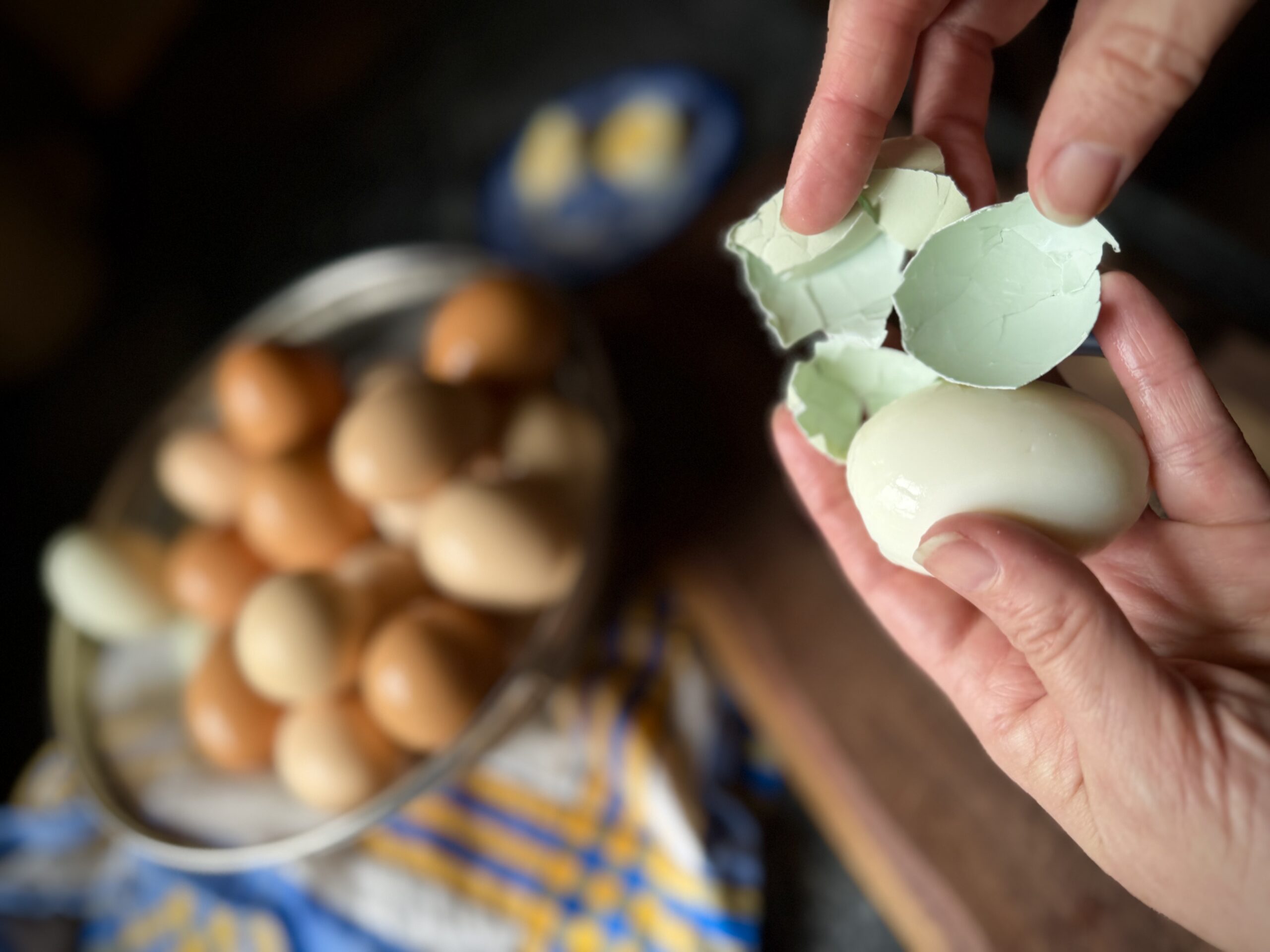
Very fresh eggs are naturally more difficult to peel because the thin membrane between the shell and egg white clings tightly to the white. Steaming helps loosen that membrane more effectively than traditional boiling, making peeling noticeably easier, especially with farm fresh eggs.
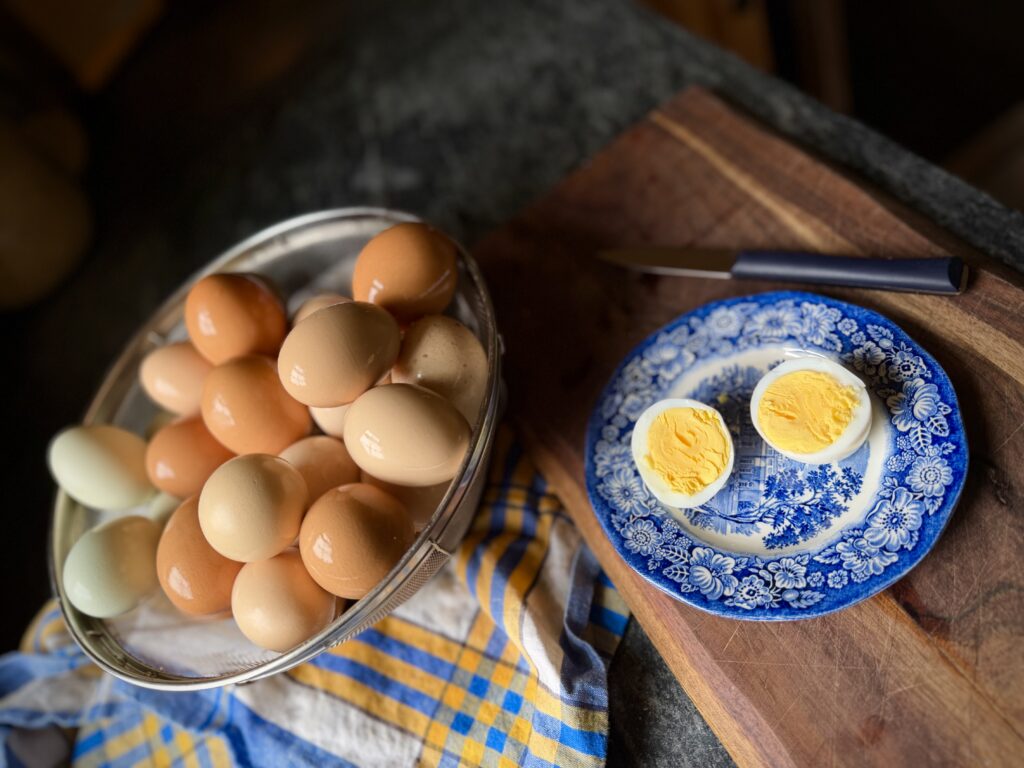
The whites stay tender, the yolks cook evenly, and cleanup is simple. And of course, the most important part, the shells peel perfectly every time. In my kitchen, steamed eggs are a staple for quick breakfasts, egg salad, Cobb salad, deviled eggs, and simple protein snacks. Especially in springtime when eggs are abundant.
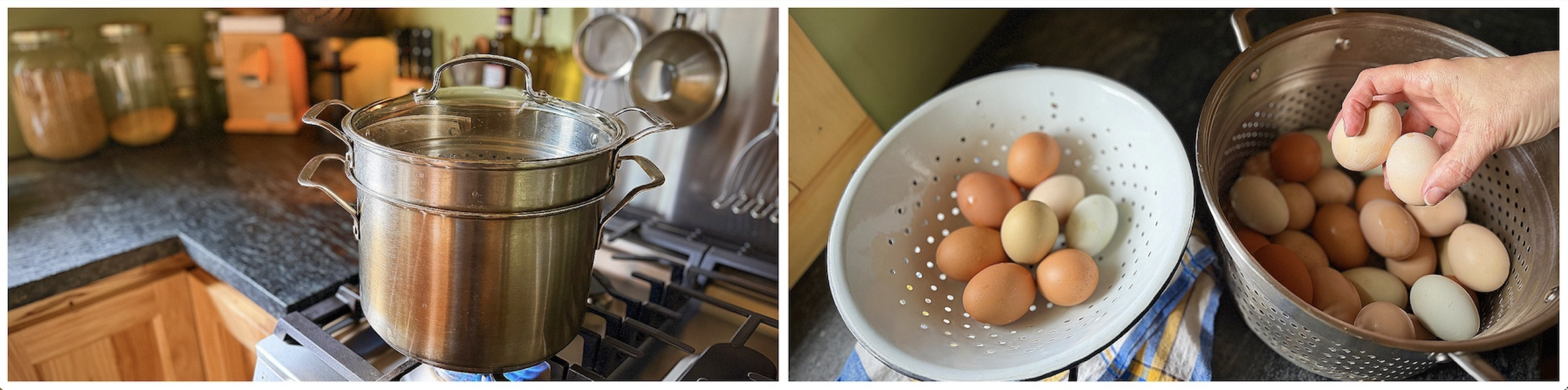
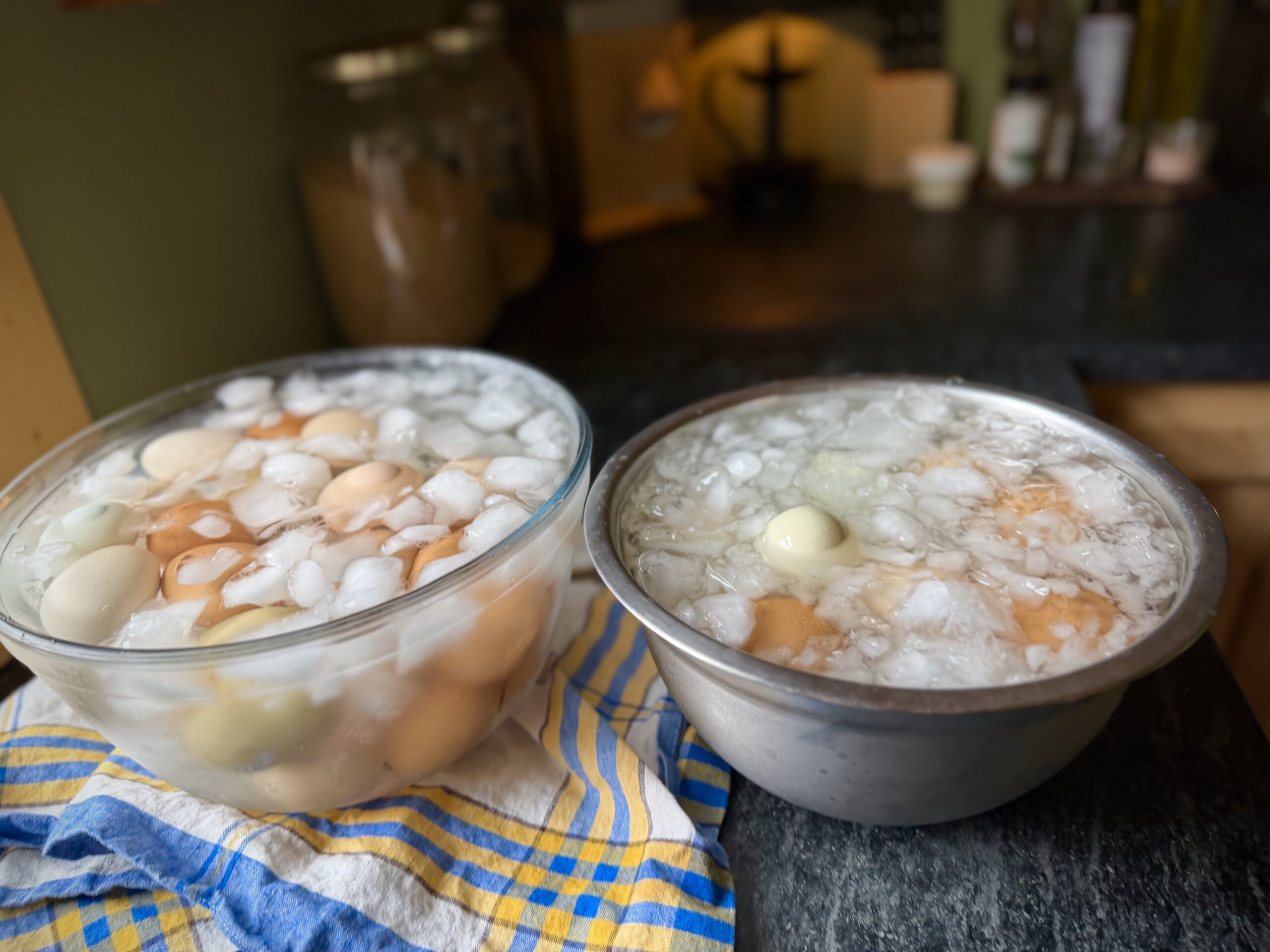
To make steamed eggs, simply bring about an inch of water to a boil in a pot fitted with a steamer basket. Add eggs, cover, and steam for 12–15 minutes depending on your preferred doneness. Immediately transfer the eggs to an ice water bath and let cool for about 15 minutes before peeling.
Key Steps for Easy-Peel Steamed Eggs
- Wash eggs if needed
- Bring 1-2 inches of water to a boil in a pot fitted with a steamer basket
- Add eggs to basket
- Cover and steam 12–15 minutes, depending on preferred doneness
- Immediately transfer eggs to a large ice water bath
- Cool completely before peeling or refrigerating
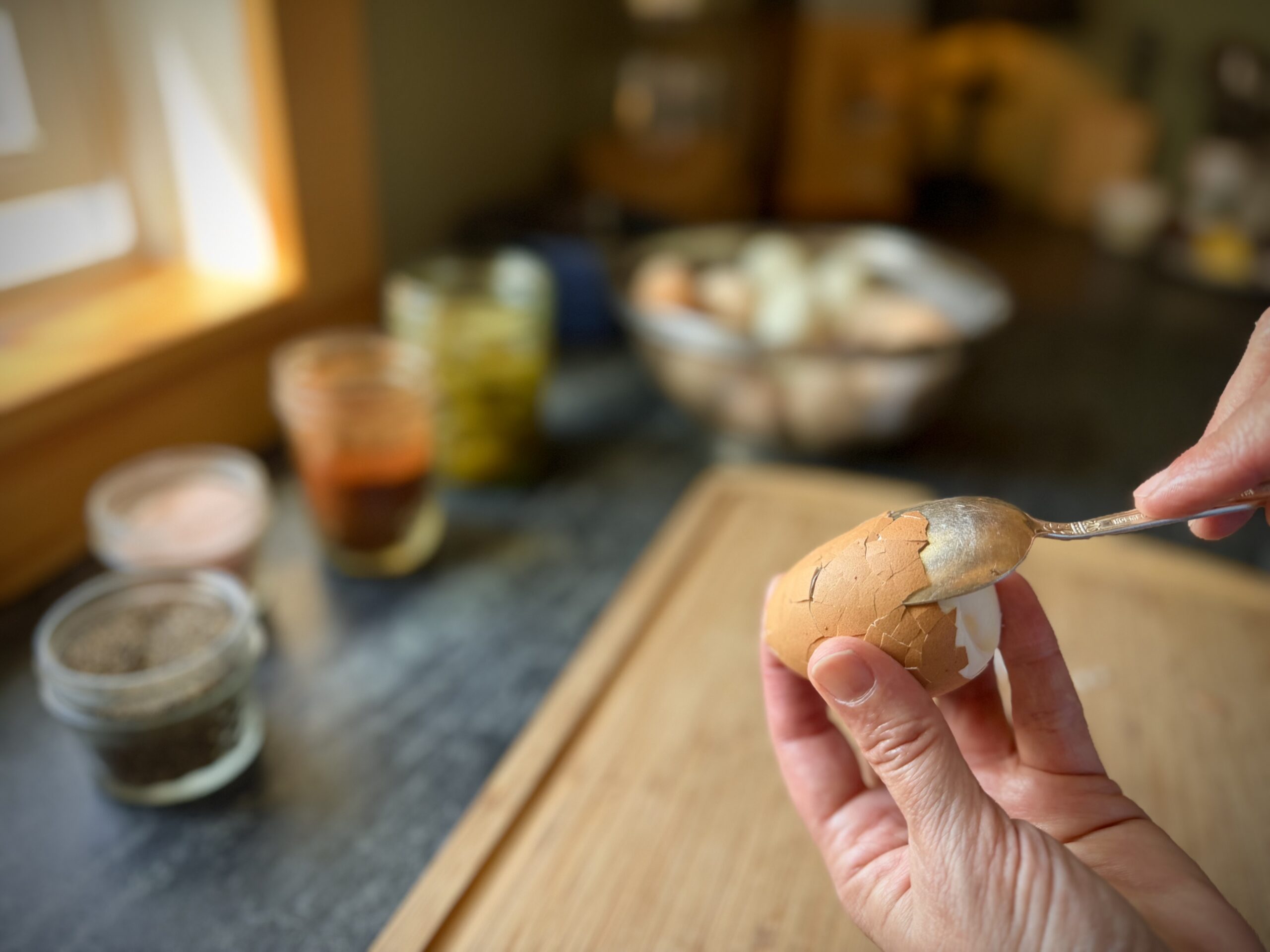
- For the rare stubborn shell, crack the egg well and slip a spoon beneath the shell to help release it
Why Do Hard Boiled Eggs Sometimes Get a Green Ring?
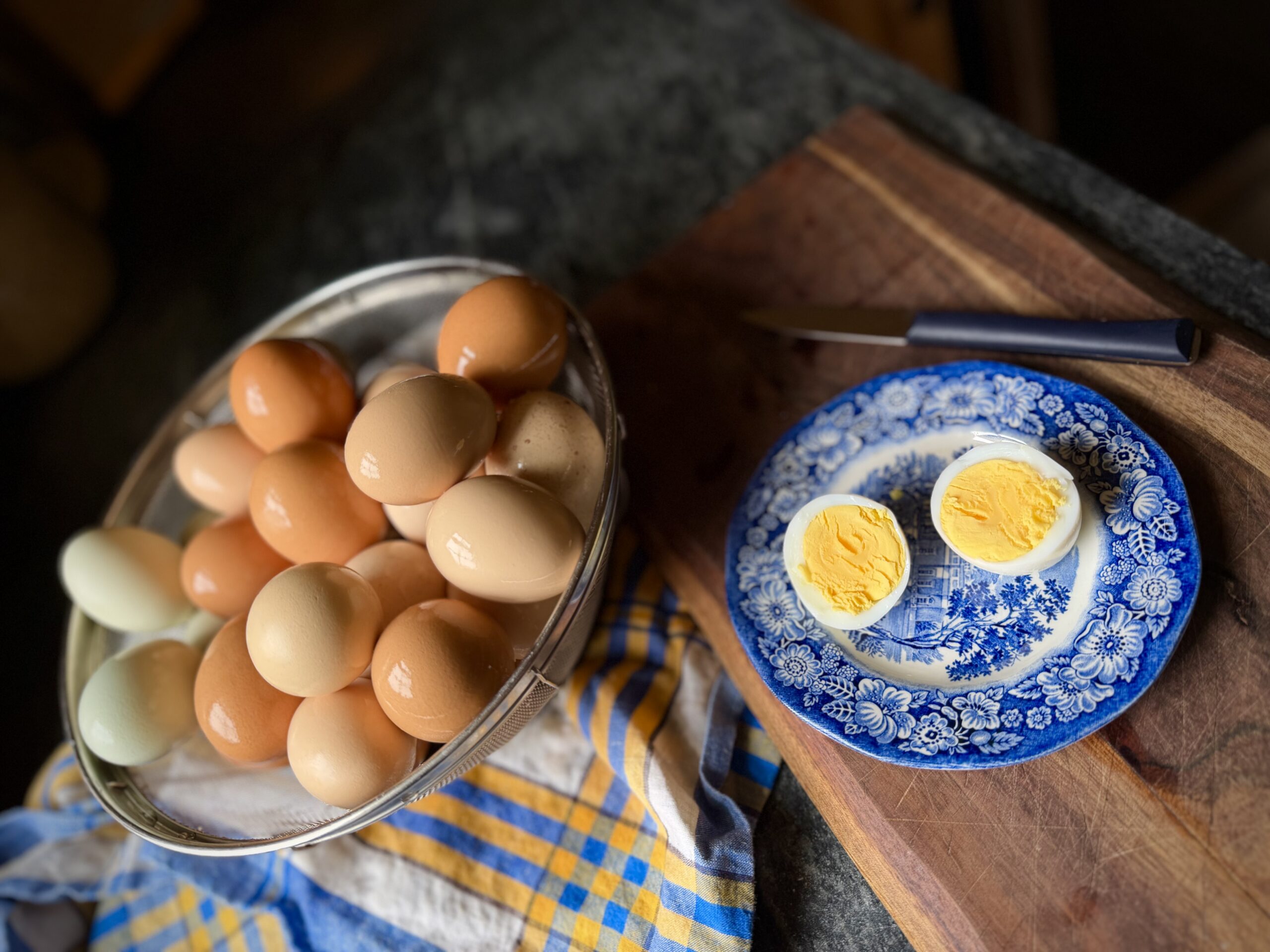
I thought we should cover this while you’re here. We’ve all had this experience. A gray-green ring around the yolk is usually caused by overcooking or cooling too slowly after cooking. (Use a lot of ice!) While harmless, it can affect flavor and texture. Not overcooking eggs, and immediately transferring eggs to an ice bath helps prevent this discoloration and keeps yolks bright yellow and tender.
Shell Still Sticks?
This is a helpful trick. Even though steaming is the way to go in my experience, rarely there will still be the odd, stubborn shell that does not want to release. For these, I’ve found that gently slipping a spoon beneath the cracked shell can help separate the membrane and remove larger sections of shell with ease.
Equipment Used
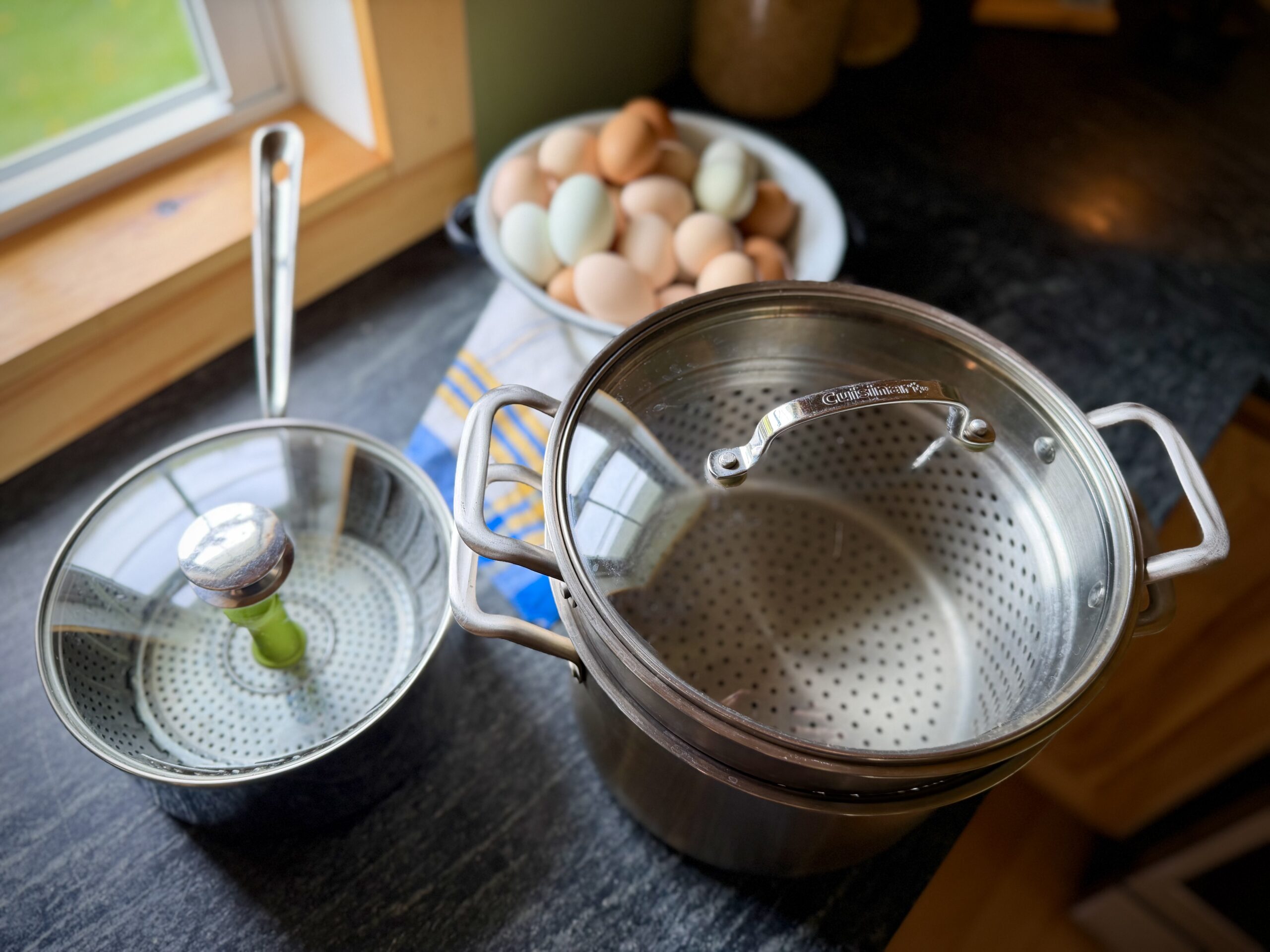
Any steamer basket and pot with a lid will do, but here are the two I use, depending on the size batch I am making. See picture near the top of this post.
- Steamer Basket – affordable, handles small-moderate sized batches.
- Steamer Pot – Handles bigger batches, and also useful for steam blanching produce from the garden, as you prepare it for the freezer. Double duty.
Hope you found some useful tips. Spring is here, and our eggs baskets are overflowing. This is one of those simple kitchen methods that improves a basic task. At least it does for me! Once you try steaming eggs instead of boiling them, it’s hard to go back.

How to Make Easy-Peel Hard Boiled Eggs {Steamed Method}
Method
- Add 1 inch of water to the pot. Put steamer basket in the pot, cover, bring to a boil over high heat. Once boiling, add eggs to the basket, cover, and continue cooking over medium-high heat for 12-15 minutes, depending on your preference for doneness.
- Remove eggs with spoon and submerge in ice water to cool completely. At least 15 minutes, but the longer the better.
- To peel, gently tap eggs to crack shell, then remove shell in a bowl of cold water. The water gets under the shell and makes peeling even easier. Give them one final rinse.
- Use to make deviled eggs, egg salad, enjoy as a snack or chop into your favorite salad.